
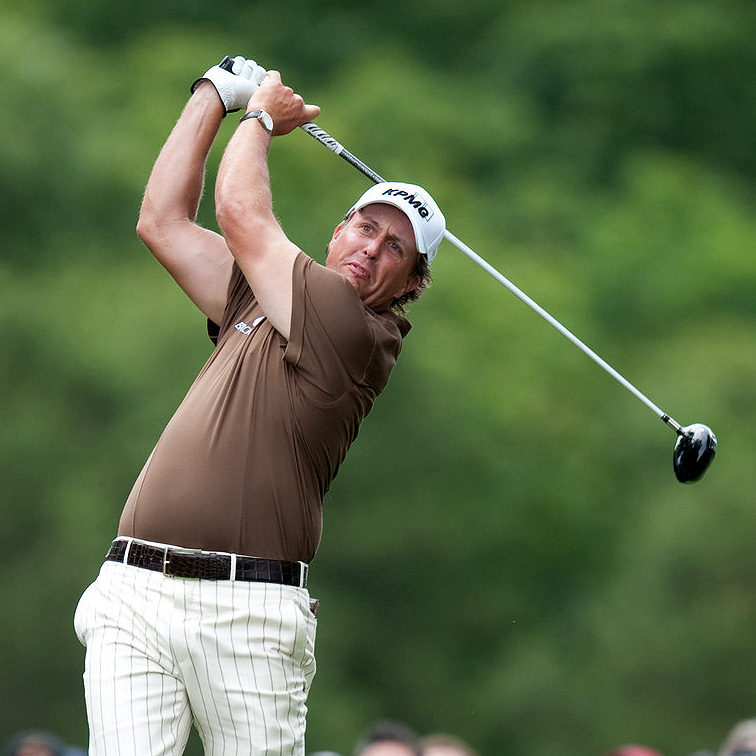
ESPN golf analysts Andy North, Curtis Strange and Paul Azinger and host Mike Tirico participated in a media conference call today to discuss ESPN’s multiplatform coverage of the 2012 Masters Tournament at Augusta National Golf Club. Coverage begins with live SportsCenter reports from Augusta on Monday, April 2, and also will include 4.5 hours per day of first and second-round play on ESPN, ESPN HD and ESPN Deportes on Thursday and Friday, April 5-6, five days and 14 hours on the ESPN 3D Network, extensive coverage on ESPN.com and a special 43-hour Masters tribute on ESPN Classic. Live coverage of Wednesday’s Par 3 Tournament will air on ESPN, ESPN 3D and ESPN3.
A transcript of the conference call follows:
MIKE TIRICO: It’s year 5 for us, and I’ll repeat what I’ve said the other years. There’s no greater thrill than knowing that your place of work for the week is not just Augusta National but you go to Butler Cabin to work for the couple of days that we’re on Thursday and Friday and the par‑3 on Wednesday has been so well received over the first four years, so look forward to returning to all of that, and our golf schedule is small in terms of numbers, but the best in terms of stature. We get to cover this great tournament, the U.S. Open, the Open Championship all four days, and work the first day of the Ryder Cup. So we’re pretty fortunate to have that schedule.
For that small a schedule in terms of number of events, to have three major champs and all guys who have been there, done it and know the TV route with Zinger, Curtis and Andy, it’s a pleasure, and once again, it seems like every year we top this, but look at all the story lines in 10 weeks, Mickelson, Woods, Donald, McIlroy all winning. The hot guys are hot. There’s no shortage of story lines, so we look forward to another phenomenal few days at Augusta National.
ANDY NORTH: I want to go on what Mike was saying, the fact that the two top players in the world, Rory and Donald, and then Phil and Tiger winning, any time you’ve got Phil and Tiger coming into this event playing well, I think it’s potentially one of the most enjoyable Masters to cover going back maybe seven or eight years when we had that time frame when Phil and Tiger and Ernie and Goosen and Vijay were all at the top of their games coming into the Masters playing exceptionally well.
I think it’s going to be that same kind of feeling there, that you’ve got the guys that you want playing well playing well; that’s really special. And any time you get to Augusta, for me as a player, the Masters is really the start of the golf season. We had a lot of good tournaments before that and a lot of guys are grinding to do their thing, but it always felt like this is what we’ve all been getting ready for, and to go there with the excitement and the idea that from this point on you hit a bunch of majors coming up, and really the teeth and the meat of the schedule was coming, and I always looked forward to getting to Augusta mainly because of that.
CURTIS STRANGE: Well, ditto to whatever everybody said. I just think that it’s always exciting to go there, and it was very exciting as a player, as Andy said, and it’s exciting to go as a TV guy, mainly because I don’t have to hit it off those side‑hill lies and putt those greens. It’s just more relaxing than having to do that on some of the holes, some of that pressure.
Thinking back, we’ve all thought a lot about this game in the last ten days, since Bay Hill, and I think it’s exciting because this is the first Masters post‑scandal. This is the first Masters that’s going to be nothing but golf, and I like that. And I think that the landscape has changed a great deal, which we’ll probably go into in a moment with questions, but it’s going to be a good week.
PAUL AZINGER: I’m pumped because I think honestly this is going to be one of the most anticipated Masters in a long time, and really I think the whole Tiger Woods winning at Bay Hill was huge. He’s going to be the most confident player in the field. He’ll probably come off as a favorite ahead of Rory McIlroy and whoever is ranked ahead of him.
I think the anticipation is pretty big for this event, and these guys said earlier, with McIlroy and Donald and Mickelson and all the top players being red hot, I think we look forward to a great event.
I think that Tiger Woods still is the big draw on this Tour obviously. I’ve said all along I thought the Tour was kind of a two‑show pony, and Tiger was one and Mickelson was kind of getting a half and then the rest get a half, but I believe that dynamic has changed a little bit now with McIlroy playing the way he has and Luke Donald becoming the type of player he has become. There is a lot of anticipation for this Masters. Tiger with the convergence of his physical and mental aspect to him now. You think about it, as Curtis alluded to, the kind of post “it hit the fan” with Tiger Woods, he finished fourth two years in a row at Augusta really where his head wasn’t in the game, and he had a bad left knee and he was in the midst of a colossal swing change. He still finished in the top 5 at this event.
Who knows; he’s coming in the most confident player, and if his mind is like it was at Bay Hill and he’s physically even close to where he was, he might run off and hide from this field.
Q. For any of you, can you talk about Rory and his past year starting in Augusta with that final round, what you’ve seen in him, going on to win the U.S. Open and then winning a couple weeks ago in Palm Beach? Maybe you could address Rory’s season going into the Masters.
ANDY NORTH: First of all, I thought the way he handled the meltdown last year at the Masters was spectacular. He stood there and took it like a man, and I think that’s very important. And because he handled it so well, it helped him grow as a player immensely. We forget how young he is. He’s just a kid yet. He handled that exceptionally well, much better than we’ve seen some veteran players handle defeats like that.
And I think it really helped him once he got to the U.S. Open. We saw there what he can be. He has beautiful technique. He has tons of confidence, his putting has improved dramatically over the last 18 months working with Dave Stockton. So I think he’s the total package. I always thought that he was the next No. 1 whenever Tiger relinquished that reign. So I think he’s handled it exceptionally well, he’s had a lot of things on his plate over the last year, and he’s still a young guy. He’s still growing in how he handles this stuff.
But I think he handles it exceptionally well. You forget sometimes that he is 22 years old. I’m looking forward to him playing at Augusta. I think his game fits the golf course unbelievably well, and I think he’s the kind of guy, we got so used to Tiger just playing well week after week after week when he was at his best, I think Rory is the kind of guy that when he is at his best, he can beat all these guys, and he might do it for a two or three‑week period of time, and then maybe he won’t be in contention. I don’t think that’s necessarily a bad thing. I think when he gets it going, he’s maybe as good as we’ve seen in a long time.
Q. I’ve got a course question which I’ve already asked Andy North this question so I’ll direct it to Curtis and Paul. When people talk about what it takes to win a Masters, what comes up most often is putting and the difficulty of the greens, but it seems to be true that if you don’t play the par‑5s well, you don’t have a chance, almost no matter how well you putt on the other holes. Would you guys agree with that?
CURTIS STRANGE: I think that the first mandatory requirement now is length. Now, it doesn’t mean you can’t be a medium‑sized hitter, but you have to be so exceptionally sharp that week that you are giving up a lot, and Augusta, you’re giving up a lot on the par‑4s, but especially on the par‑5s.
You know, the par‑5s, if you can get it on all of them in two, which the big hitters can, it is such an advantage, and it’s not only an advantage because of your length, it’s an advantage because of the height and the shorter irons. You’ve got a shorter club you’re coming in that you can get it up in the air and stop it on 13 and 15 and 2 possibly.
So the strength factor is huge at the Masters. It always has been, but especially in the last ‑‑ well, since they lengthened the four or five holes.
The par‑5s, as you said, are so important. They always are. They’re important every week. But even more so because of the way the game has changed. And also the length off the tee allows you to come in with shorter irons into these big par‑4s, much shorter than other hitters, and it’s just such an advantage there because now you can control the ball on the green better, especially when they get hard and firm and fast, and just strength rears its head so many ways at Augusta that makes it so advantageous to hit it a long way.
PAUL AZINGER: I agree, the par‑5s are ‑‑ you think about it, you’ve got Schwartzel who’s not a bomber, Mike Weir, Zach Johnson were able to win the Masters not really killing the ball off the tee, but wasn’t it Zach Johnson that was famous for laying up on all the par‑5s but his wedge game was sharp.
Tiger Woods for his career is something like 1,800 or 1,900 under par on the par‑5s, and he’s only about 40 or 50 under on the par‑4s, and he actually might be over par on the par‑3s for his career. So Tiger’s made a career out of killing the par‑5s. Augusta’s par‑5s are really the ‑‑ they’re the major scoring holes. They’ve added a lot of length, a little bit of rough and a bunch of trees. So accuracy plays a little more of a part. It’s not just the bomber’s paradise that it once was, but you’ve still got to get the par‑5s.
Q. Now that Tiger has won at Bay Hill, I want to ask everybody if they think the chase for Jack’s record is back on, if they ever had doubts that it was off, and maybe just to illustrate how difficult it might be, is there anybody on the landscape who has four more majors in them besides Rory?
ANDY NORTH: Well, I think if you look at the young players, I think that Rory has a chance to win multiple majors. But until you’ve done it, you don’t know. And so many of the younger guys looking for that first major championship that until that get that one, that’s probably the hardest one. Once you get that, then you at least sense that you can do it, you’ve done it, that sort of thing, so I think he has the potential to win multiple championships.
You look at Luke Donald’s game and you think this guy does everything so well; he’s got a great short game; he’s got a game that should do well in major championships, but up until the last year or so, he really hasn’t been even involved in the talk at any of the majors. So getting that first major is so important.
You know, can Tiger do it? I always felt like if he got healthy, he had a chance. You know, a lot of people wrote him off right away when he struggled for a while. Every great player we’ve ever had and seen in our game has gone through a period of time where they’ve struggled, a year, maybe a season’s worth or a couple of years even, and they get it back together. Look at what Vijay Singh accomplished after 35, look at what Steve Stricker has done after 35. There’s a lot of wins out there for him.
You’ve got to be lucky to be playing well at the right times and at major championships, but I always felt, and I don’t know if Curtis and Paul felt this way, I always felt like going to a major championship was maybe easier to win than a regular event, at least in my mindset it was, because it eliminated so many players because either the difficulty of the golf course or the mental strain that gets put on players that week.
So I think because Tiger is so tough mentally, it looks like he’s getting healthy again, it looks like he’s starting to get his mind organized well again, I think he’s got a great opportunity to win multiple more major championships and see if he can catch Jack.
PAUL AZINGER: And I agree with that. The whole thing with Tiger, the emotion ‑‑ I talk about the emotional side of what happened a lot. I’m one of the believers that says that he’ll still break the record if he’s physically fit. However, there was this mental hurdle that he had to get over. You know, the worst human emotion is shame, and he was ashamed of himself. He brought shame on his family. And then you have kind of the heartache of it all, and then there becomes anger at all the people that make jokes and make fun. Those are real emotions, and it’s difficult to overcome that.
Sometimes your family won’t let you get over the shame of something. It happens in many levels. It could be alcoholism or something. It could be a million things. It could be divorce. It could be anything. But the person has to be able to forgive himself, as well, and I think that ‑‑ to me I think Tiger has gotten to that point where I believe the people he’s surrounded with have gotten beyond the shame of what happened. I believe that winning at Bay Hill for Tiger has taken him beyond that point where he’s been able to forgive himself.
And that to me, if Tiger can get to where he was mentally ‑‑ he didn’t separate himself from the rest of the players on Tour because he just always hit it better. He made more putts more often, and the physical part of it is superb, don’t get me wrong, but there was a place mentally that Tiger went to that no one else has seen except maybe Nicklaus, the elite of the elite, and that’s where Tiger has taken himself. The stuff has been jumping in Tiger’s head in that second and a half that it takes to make a golf swing that wasn’t in there before the accident, before it hit the fan for him, whatever it was, he didn’t have that at Bay Hill.
And if he brings that mental mindset that he had at Bay Hill the rest of the year, I think he returns to the Tiger of old. I mean, the sky’s the limit for him.
He said something ‑‑ Tom Renaldi asked him a question, and he asked was it different for you, Tiger, leading with a chance to win than it was previous, in the however many days since he’s won. Tiger said no ‑‑ the all‑time cliché is that we take one shot at a time. Well, he said that differently. He said, I had a game plan ‑‑ he said it was no different basically Saturday night going into Sunday. “I had a game plan, and all I wanted to do was try to get the ball where I wanted it to go.” That’s just a different way of saying one shot at a time.
For him when he said that to me, I listened to that, and I thought, you know what, it was no different for him, and he’s done it more than anybody that plays the game today.
CURTIS STRANGE: And I think Paul is exactly right, and not to dwell on Bay Hill so much, but I don’t think we can overstate the importance of him winning at Bay Hill for two reasons.
One, it might be a little bit of an overstatement, but one, this is the start of his second career because of getting over the shame, getting over the past, starting anew, and also starting anew with new mechanics and a new golf swing. It solidifies his belief in Sean Foley. I think it was huge, huge for him, and then also I think now we can move on.
PAUL AZINGER: Curtis, are we going to be in agreement that technically ‑‑ when he was with Hank, I think the great instructors in today’s game would probably have seen towards the end of his dominance really with Hank, when he started to get stuck in his golf swing, we could all look at Tiger’s swing and see five or six or seven things that we didn’t like and so would the great instructors, but if you look at Tiger’s swing now, if you were picky, you might find one or two. I bet Andy and Curtis are in agreement, he is more fundamentally sound now than he was before he had the accident.
CURTIS STRANGE: He didn’t ‑‑ not one time working with Hank Haney did he hit the ball as well as he did this past weekend. Not one time did I see him in the years with Hank Haney did he hit the ball that well. Drove it well, he was number one in driving, distance and accuracy hit, damn near all the greens, and when you do that, it takes the pressure off the putting, and he was able to putt well.
MIKE TIRICO: I’m going to add one point to the contrary of all this because it sounds like the guys are saying yes, yes and yes to your questions. The last seven majors have been won by guys who won their first major. 10 of the last 11 have been won by first‑time major champs. I’m just saying there are more guys in the field who have the confidence and the indestructible Tiger atop of the leaderboard, I think that is not there for many more players in the field as we go in. So that would be the one other‑side‑of‑the‑street view of this that I would say maybe it’s not going to be as easy because of the health issues, will they hold up, and maybe more players getting to the first tee on Thursday of a major who not only have a chance to win but know how to win.
PAUL AZINGER: Tiger at his best was unbeatable. You can’t play defense in golf. I think the one element of intimidation that Tiger had on everybody pre‑accident, pre‑fire hydrant, was that when he walked on that tee on Sunday, and I’ve said this before, black pants and a shirt the color of blood, you looked at him like he was the most disciplined player by far, maybe the most disciplined athlete, and at times maybe the most disciplined person.
But what we didn’t realize was that maybe we were more disciplined than he was. We didn’t know that. This generation knows that. They can say, I think I’m more disciplined than him, if they’re not doing the things that he’s doing, or was doing. I’m just saying, this generation now can say, I’m just as disciplined, maybe more.
Q. Curtis, there’s been ample evidence this year and at lesser events how difficult it is to close out a tournament on a Sunday. Can you give us some idea, especially at an event like this, what’s going through a player’s head and stomach trying to close out a lead on a Sunday, how difficult that is and what traits serve a player best coming down to the finish?
CURTIS STRANGE: You know, I just think it takes a lot of character, it takes a lot of guts. It’s hard.
You know, I saw this year an interesting thing. When Kyle Stanley won Phoenix after blowing it at San Diego the week before, when Peter Kostis ‑‑ this is just an example. When Peter Kostis interviewed him before it was official that he won, he was talking freely; he was in control of himself. After whoever didn’t make his second shot and Kyle Stanley had won officially his first tournament, he couldn’t speak. His lips were quivering. He was so emotional, and it just showed how much it means to these guys, and we get blown over ‑‑ they make their money and don’t win a lot of tournaments. You know what I’m saying. I thought it was a great portrait of a person and how much it meant to them.
Now, in a major in a Masters which is coming up next week, you can ten‑fold the pressure on that, and I’ve been through it, I know. I always felt like I could handle Sunday afternoon reasonably well. I felt somewhat comfortable.
But the first time I was in contention on Sunday afternoon at the Masters, it was hard. It was really hard, physically and emotionally, and everybody has to go through it. We saw it first hand with Rory last year, and I think you just have to buckle down if you’re a youngster. You don’t know how to buckle down and do it when you’re as young as Rory McIlroy or some of the other youngsters. You have to be there a few times. You have to be there a few times in other events. And even then you just have to buckle down and focus.
It’s not easy. Some people have written books over it. But you just need a lot of intestinal fortitude, a lot of focus, don’t think about trophy, don’t think about anything else. You have to take, as Zinger said, one shot at a time. There’s no tricks to it.
Q. I actually wanted to ask you a little bit about last year’s tournament. I actually went back and watched the whole final round. I had a DVD of it, and there were eight different guys tied for the lead, and I think I’m more confused now about what happened than I was last year in with, NASCAR terms, kind of like eight wide coming down the final stretch. From an entertainment standpoint, I know it’s hard to say it was the best Masters ever, but from an entertainment standpoint if Paul or Curtis can remember watching one that had them more on the edge of their seat.
PAUL AZINGER: I missed the ’86 Masters with Jack coming down the stretch because I was in Hattiesburg playing.
You know, it was awesome. It got ‑‑ Rory let everybody in, and it was anybody’s game, and my palms were sweating. I’m sitting there with Tirico and Curtis, and we’re watching it doing the 3D telecast and getting the call the final day of the Masters, and it just became so compelling. You know, I need to rewatch it myself to remember who all the eight guys were.
But for Schwartzel to come out of the pack the way he did and birdie those holes at the very end to finish that championship ‑‑ the Masters off, you can’t call it a championship, you call it the Masters, I guess. I said championship last year a few times.
But what an event, and it was awesome last year. It’s a very, very difficult course to win on because most of the people that are trying to win have watched the Masters their whole life, and they’ve watched it on that golf course.
Schwartzel impressed me. I thought Schwartzel would be a dominant force in the game, and maybe he will after he defends and he can kind of move on.
CURTIS STRANGE: ’75 Masters with Johnny Miller, Tom Weiskopf, Jack Nicklaus, Nicklaus sitting in that scorer’s tent at the last hole when they both had birdie putts, pretty exciting stuff. ’86, Jack winning was ‑‑ not only exciting but so emotional for everyone. And then last year. Last year was top rank.